
Music streamers are hiding what a fan is worth
A $30 billion industry that doesn’t distinguish a superfan from a smart speaker is bad for fans, and worse for the artists. This inaugural episode dives into how we interact with music today, and why that’s ripe for a rethink. Bold enough to try? There's $1bn+ of trapped revenue waiting for you.
We've forgotten the cost of fandom
And it's changing the way we connect
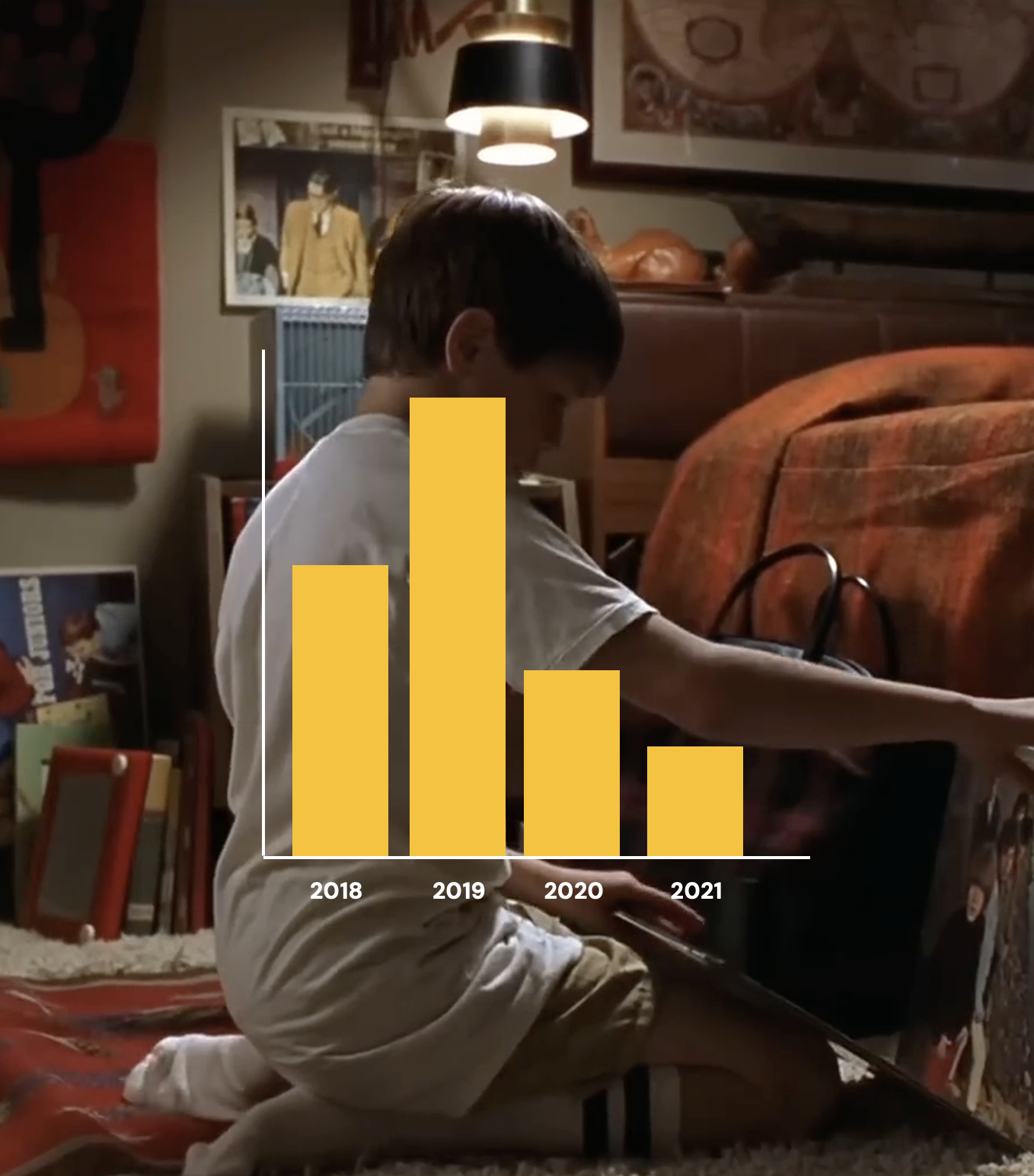
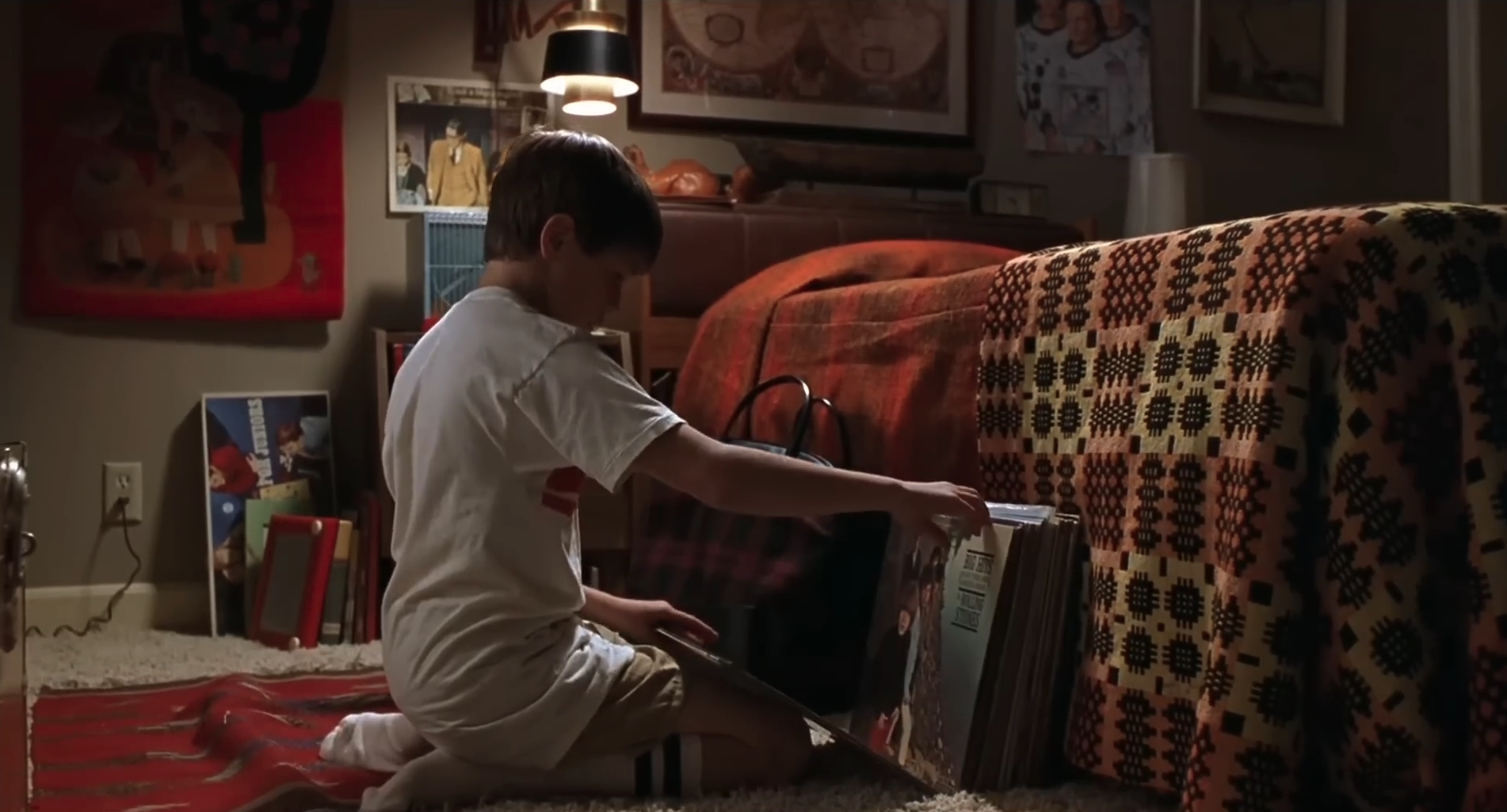
There's a scene in Almost Famous I think about more than is probably healthy. The older sister finally escapes the house and on her way out she leaves her kid brother William her record collection as gift under his bed. America, by Simon and Garfunkel, plays while he flicks between them, stroking the covers. Inside the sleeve of The Who's Tommy is a note: “Listen to Tommy with a candle burning, and you will see your entire future.” He lights the candle, drops the needle and his whole life changes.
Something about that scene fills my soul with joy. It might be the soundtrack or just the heavy dollop of nostalgia. But I think it's something more.
I think it's about the cost of fandom.
On the outset, it could look like it's a generous sister passing on something she didn't want to take with her. For the sister, those records cost something. Money invested collecting them. Time spent interpreting them. Choices of how he'd let herself be defined by them.
That moment only lands because those records cost her something. The saved-up money. The years of choosing this over that. The ache of handing them over. The gift had weight because the thing was scarce — and scarcity is where meaning lives.
Now run the 2026 version. You can fire any album ever recorded at anyone on earth, instantly, for free. And it lands with the thud of precisely nothing. A playlist you share costs you nothing, so it says nothing about you. We keep congratulating ourselves for democratising music. We didn't democratise it. We drained it.
What follows is an autopsy and a blueprint. The autopsy: how an industry posting record revenue has quietly built itself against its own best customers, and why that's about to catch up with it. The blueprint: the company that takes the gap they refuse to fill. I'll show my workings and link every number, because the whole argument rests on the numbers being real.
The bargain we forgot we made
You cannot understand the per-stream economy without remembering it was born in an emergency.
In 1999, global recorded music was a roughly $23.7 billion business selling physical objects at healthy margins. Then Napster arrived, and ownership — the entire commercial basis of the industry — stopped being something you had to pay for. Over the next fifteen years the business didn't dip; it haemorrhaged. By 2014 global trade revenue had collapsed to $13.1 billion, a fall of roughly 45%. An entire generation learned that music was free, and the industry had no answer.
Streaming was the answer, and it was a brilliant one — but it was a peace treaty signed under duress. The bargain was simple: give people unlimited access for a low flat fee, make piracy pointless by making legal music more convenient than stealing it, and pay rights holders out of a shared pool divided by play counts. It worked. Recorded music has now grown for eleven straight years to $31.7 billion in 2025, with streaming at nearly 70% of revenue and around 837 million paying subscribers worldwide. On its own terms, the settlement succeeded completely.
But here is the thing everyone forgets: the conditions that justified the bargain are gone. In 2004, rights holders had no leverage, no behavioural data, and an existential need to make piracy stop. Pro-rata — pay everyone out of one bucket, by raw volume — was a reasonable crisis response when you couldn't tell a devoted fan from a bot and were grateful for any revenue at all. Today the platforms can tell a fan from noise with surgical precision, the industry is healthy, and piracy is a rounding error. The emergency ended a decade ago. The emergency's pricing model did not. What was once a sensible truce is now just inertia with a paywall — and, as we'll see, inertia that has quietly hardened into a machine that punishes the very people keeping music alive.
Strip it back to zero
Forget the playlists, the charts, the £10.99 all-you-can-eat buffet for a second. What was recorded music ever actually for?
Not background. Not “content.” Fandom. The whole point was devotion you could see, hold, and show off. And being a fan used to cost you something — in four currencies. Money: the pocket money you blew on one record instead of three. Reputation: the band t-shirt worn like a flag, your cred staked on a name. Choice: limited hours, so picking this artist meant rejecting another. And sheer inconvenience: queuing overnight, hunting the import, first in the shop on release day. All of it irrational to a casual listener. All of it rational to a fan. That's the tell. The cost is the fandom — and the meaning that cost creates is exactly what lets you give it away: the inheritance under the bed, the mixtape, the record passed to a friend as an olive branch.
Here's what the industry refuses to see: fans are still paying. Loudly, and with their own money, through every door left open to them.
- Vinyl just posted its nineteenth straight year of growth, past a billion dollars in the US alone — and half of the people buying records don't even own a turntable. They're not buying the audio. They're buying the artifact.
- Live music had its biggest year in history: Live Nation alone pulled $25.2 billion, a record 159 million fans.
- Taylor Swift sold 859,000 vinyl copies of one album in a single week — the biggest vinyl week of the modern era — largely by releasing it in multiple variants so fans bought more than one.
- In K-pop, fans routinely buy 150 to 200 copies of the same CD to chase event entries; one profiled fan spent roughly $36,500 in a year. Most of the discs are never played.
- And the data names the customer precisely: Luminate says “superfans” are now 20% of US listeners, and they spend $113 a month on live (66% above average)and $39 on physical (105% above average).
None of that is consumption. It's devotion, made visible. Strip music to zero and that was always the job: not to play you a song, but to let you prove you cared. So why does the entire business still pay out as if every single listen were identical?
Follow the money: the anatomy of an £11 subscription
Because of one sentence the whole industry treats as a law of physics: a stream is a stream is a stream.
Here's the mechanic nobody looks at. Streaming doesn't pay a “rate per stream.” It runs a pro-rata pool: every subscription in a market drops into one bucket, and you take the slice that matches your share of total plays. A superfan who plays your album four hundred times this year and a smart speaker droning a mood playlist to an empty kitchen pour into the same bucket, weighted identically. The famous fraction of a penny isn't a price anyone sets; it's just the bucket divided by the plays, after the fact.
Now trace where your £11 actually goes, because it's worse than most fans realise. The platform keeps about a third. The remaining two-thirds flow to rights holders, splitting roughly 56% to the recording side and 14% to publishing. Inside that recording slice, the label typically keeps the great majority and the artist a thin royalty — on a classic deal, the artist might see something like a sixth of the recording money, which is a sliver of a sliver of your £11. The songwriter, splitting the 14% publishing share with their publisher and collection society, often does worse. So of the note Anita could have bought a record with, the person who actually made the music ends up with pennies, routed through four intermediaries.
And the structure concentrates that thin gruel ferociously at the top. The UK's competition regulator, in its landmark study of music streaming, found that over 60% of all streams go to the top 0.4% of artists, and that an act needs around 12 million UK streams to earn roughly £12,000 — a bar fewer than 1% of artists ever clear. Then, in 2024, Spotify simply stopped paying any track with fewer than 1,000 streams a year at all. Musicians' union UMAW estimated this demonetised around 86% of the catalogue; of roughly 100 million tracks, only about 37.5 million now earn anything. Spotify's own Loud & Clear data shows just 2.3% of uploaders cleared $1,000 in a year.
Hold that picture: a machine that, by design, rewards reach and is blind — on purpose — to depth.
The load-bearing lie
The per-stream pool is the symptom. The real lie is bigger:
Spotify is a music platform.
It isn't. It's a passive-listening utility that happens to run on songs. It makes more money the less you care who you're hearing — because caring is expensive and indifference is cheap — and it has quietly engineered the machine to keep it that way. Three exhibits.
Discovery is a tax, not a service
Want the algorithm to push your track? You can buy that — through “Discovery Mode,” where the price of being recommended is a royalty roughly 30% lower. The platform doesn't give artists discovery. It charges them for it, in the only currency they have. Read that twice: the thing the industry most needs — new artists found by new fans — has been turned into a pay-cut the artist funds.
Celebration is a cost to be minimised
Spotify's “Perfect Fit Content” programme — dragged into the light by Liz Pelly's reporting — seeds cheap library tracks under invented “ghost artist” names into the big mood playlists to shave the royalty bill. One investigation found around twenty songwriters behind more than five hundred fake “artists.” A real, named, beloved musician is the expensive way to fill a Chill playlist. So the platform quietly prefers the fake one. That is the entire thesis in a single fact: the system is optimised against the named artist a fan loves.
The referee owns both teams
Anonymous ambience is cheap and sticky; named-artist fandom is expensive and flighty. And the major labels — who took equity stakes in Spotify and own the giant volume catalogues that win under pro-rata — have precisely zero reason to reopen the question. When the rule-makers profit from the rule, the rule does not change from the inside. The “fairness” debate is settled by the people who own both sides of the table.
And the cost of the lie? We know it precisely, because someone built the other model. On a fan-powered (user-centric) system, the superfans paying real money were 1.9% of listeners and generated 42% of the revenue. That value exists, right now, in the data the platforms already hold. The dominant model simply refuses to look at it — because looking would mean admitting the bill is owed.
Why now: the floor is falling out
If this were merely unfair, it could limp on for another decade. It can't — because the one thing streaming optimised for is about to be free, and the one lever it has left is jammed.
The product is being commoditised by AI. The platform got very good at frictionless, generic, mood-based audio. That is exactly what generative AI now produces at zero marginal cost. Deezer, the one platform brave enough to publish the numbers, says fully-AI uploads went from 18% of new tracks in April 2025 to 28% by September to around 44% by 2026 — roughly 75,000 synthetic tracks a day. Spotify says it removed 75 million spammy tracks in a single year. An AI “band” called The Velvet Sundown reached a million monthly listeners with no human members — served silently through Discover Weekly with no disclosure. When the buffet fills with infinite free filler, the buffet's value goes to zero.
And the price lever is maxed out. Spotify has already pushed US Premium from $9.99 to $12.99 in three years after a decade flat; its per-user revenue is essentially flat in euros; and its growth now comes overwhelmingly from lower-ARPU emerging markets, where both the price and the Western-repertoire share are lower. The utility is maxed out on price and exposed on product. The only direction left with real money in it is the one its model forbids: charging the people who care more, more.
The size of the prize
This isn't charity. It's the biggest unbuilt market in music. Let me size it two ways — top-down and bottom-up — because a number you can only get one way isn't a number you should trust.
Top-down. Goldman Sachs values the superfan monetisation opportunity at over four billion dollars, assuming roughly a fifth of subscribers would pay around double. Next to it sits a global music-and-merch market forecast to reach $16.3 billion by 2030. The money is not hypothetical — it's already moving, just into formats with no recurring relationship attached.
Bottom-up. Start from the roughly 800 million people paying for music worldwide. Luminate's data puts superfans at about a fifth of listeners; take a deliberately conservative 15% of paid subscribers and you get on the order of 120 million superfans. A US superfan already spends around $1,800 a year on music, live and merch combined; even the physical-ownership slice alone runs to roughly $450 a year. A fan-ownership product doesn't need the whole wallet — it needs the digital-ownership corner of it. Capture even $60–$100 a year each from a reachable base that grows from hundreds of thousands to tens of millions, and you arrive, independently, at a multi-billion-dollar gross opportunity — the same neighbourhood Goldman reached from the other side.
A back-of-envelope SOM. A beachhead of 250,000 engaged superfans × £80 a year in editions and subscriptions = £20m of gross fan spend; at a 15–20% platform take, £3–4m of platform revenue — from a footprint streaming would call invisible. Ten times that base, which is still a fraction of one percent of the world's superfans, is a £30–40m revenue business. The ceiling isn't the constraint here; the floor is already viable.
Picture the market as a simple grid. One axis: access versus ownership. The other: casual versus devoted. Streaming owns casual × access — the buffet. Vinyl, merch and gigs serve devoted × ownership — but only in the physical world, wastefully, with no recurring relationship. The empty box, the one worth billions, is devoted × ownership, done digitally. That box is the company.
Everyone can see the gap. Nobody owns it.
I'm not the only one who's noticed. The interesting part is who has, and why none of them can take the box.
The incumbents are awake but trapped. Warner's CEO has called superfans “under-monetised” and confirmed the label is building a superfan app. Universal struck a ten-year alliance with HYBE and a direct-to-fan deal with EVEN. Spotify announced a superfan “Music Pro” tier in February 2025 — and still hasn't shipped it. They can all see the door. They're all standing in front of it.
And one company has already proven the demand at scale. HYBE's Weverse turns K-pop devotion into a platform: around 10 million monthly users, subscriptions at roughly $24 a year, and 20.6 million merch items sold in 2024 alone. The willingness to pay is not in question. The only question is who builds it for the rest of music.
The startups are circling the edges, each owning a fragment. Bandcamp has paid artists $1.3 billion and gives them 82% — but it's a shop; you buy, you leave. Patreon has paid creators over $10 billion — but it's a tip jar, not an album. Sound.xyz, the great NFT-music hope, collapsed and its team pivoted to Vault, a $5-a-month subscription. Medallion sells digital membership cards; Single bolts gated audio onto Shopify; Laylois a fan CRM.
Every one of them is a storefront, a tip jar, or a mailing list. Not one makes the album itself the place — the thing you own, live inside, and go deeper into the more you care. That's the white space. It's wide open, and it's the part that actually rewires the relationship between an artist and a fan.
The solution: make music scarce again
So here's the heresy. Ready?
Make music scarce again.
Not the discovery layer — keep the buffet for browsing. But build the thing that doesn't exist: a place where being a fan costs something again, and that cost buys you something real. I built a working prototype of exactly that. It's called RELIC. Here is how it works, layer by layer.
You own it — you don't rent it
Each release is a physical object with a chip in it, paired to a numbered digital edition — editions are deliberately small, a few thousand, so the number on your copy means something. You tap the object to your phone and the album is yours: not a stream you borrow, a thing you hold. Under the hood it's a registered token; on the surface you are a cardholder, never a crypto-trader. (And no, this is not an NFT. That circus crashedbecause it sold speculation to flippers, not records to fans. Keep the ownership; bury the speculation; never say the word.)
The album becomes a place
Behind the door, the record stops being a file and becomes a destination: the stems to remix, the demos, the alternate takes, the artist talking you through how and why a song got made, voice notes left specifically for the people who bought it. A direct line to the artist. A room where the fans who own the record gather, with listening events and threads. And the ability to put the album on in sync with a friend — the candle and the Tommy sleeve, rebuilt for a phone.
Devotion is the key
This is the part the incumbents can't stomach, and the part no competitor has built: the deepest layers don't unlock by paying more. They unlock by caring more.Play the album all the way through — twice — and the stems appear. Skip tracks, and you break your streak. Be one of the first hundred owners, and the artist tells you things the latecomers never hear. The product mechanises the one thing streaming refuses to reward: attention. It is, quite literally, the anti-shuffle.
The more devoted you are, the more you get. That's the whole thesis — and it's already shipping.
The quiet asset underneath
Every tap, every full listen, every unlock builds a first-party dataset of who actually loves what, and how much they'll pay — precisely the behavioural depth signal Spotify owns and refuses to monetise, except here it's purpose-built and compounding. That dataset, plus the owned community and the direct artist relationships, is the moat. It's also the thing an incumbent eventually has to buy, because it can't build it without breaking its own model.
The economics
Here's why the artist signs, in numbers.
A modest edition — say five thousand numbered copies, priced like a nice record at £30 — is £150,000 from a single release, of which the artist keeps the large majority. Now put the same five thousand fans on streaming. To generate a few thousand pounds in total they'd each need to play the album hundreds of times across a year, and after the label split the artist might see a four-figure sum. Same fans. The ownership model returns the artist something like a hundred times more per fan — and that's beforea single subscription, remix unlock, or resale. Even on hostile assumptions — 30% sell-through, half the price — it is still an order of magnitude better. Streaming pays the artist once, thinly, forever. This pays them properly, up front, and again every time they give their fans something new.
The platform takes a clean 15–20% — far more artist-favourable than the streaming stack's daisy-chain of cuts — and it can, because the value per fan is an order of magnitude higher to begin with. Two revenue lines compound: the one-off edition (think £15–40 a release, like a deluxe record) and an optional patron subscription to an artist's space (£5–15 a month). A single devoted fan who buys two editions a year and subscribes is worth more to an artist than several thousand casual streamers — and unlike a streamer, they get more valuable over time, not less.
How it gets built: the wedge, not the war
Nobody out-Spotifys Spotify, and RELIC shouldn't try. This is a wedge: take the one layer the incumbents have abandoned and can't reclaim without eating their own margin, then expand from strength.
- Now — prove the economics. Ten artists, one genre, their existing superfans. Artists who own their own masters, so there's no licensing gate — which also happens to be exactly the independent acts the pool fails worst. One job: show that per-fan revenue beats a year of streaming by an order of magnitude, with edition sell-through above 40%. Output: a hard proof point and three case studies.
- Next — build the place. The full vault, the two-way room, sync listening, quiet resale. Widen to 50–100 master-owning artists across two genres and start compounding the depth dataset. The artist is the distribution: each one arrives with the fans who'll buy, so the platform never has to acquire a fan cold.
- Later — become the layer. Open the depth-analytics and direct-to-fan rails as infrastructure. At which point RELIC is either the independent home for music ownership — or the thing a label or platform has to acquire, because it finally needs what it spent a decade refusing to build.
And the reason the incumbents can't simply follow is sitting in plain sight: Spotify has wanted a superfan tier for over a year and still can't ship it, because charging superfans properly is an admission the base model short-changed them. They can see the door. They cannot walk through it. That paralysis is the entire opening.
What the cynics will say
Let me argue against myself, because the strongest version of this idea has to survive its best objections.
“There's no excess profit to redistribute — the regulator said so.” True, and important. The UK's competition authority concluded that low artist pay isn't caused by labels or platforms pocketing a fortune; there is no hidden pot to share out. Good — because this isn't a redistribution play. It doesn't carve the existing pie differently. It bakes a new one, out of money superfans are already spending on vinyl and tickets and photocards but currently have no good digital home for. The prize isn't a fairer slice of $0.003. It's the $113 a month a superfan already spends elsewhere.
“Spotify just copies it.” They could try — Deezer already rewrote its payout model. But the moat was never the mechanic; it's the ownership, the community, and the data — the cathedral an incumbent won't build because it cannibalises the warehouse. The unlaunched Music Pro tier is the proof.
“Fans won't pay per-artist when £12.99 buys everything.” The casual fan won't, and shouldn't. This was never aimed at them. It's aimed at the 20% who already pay for devotion in formats they can't even play. Weverse and an 859,000-vinyl week say the willingness is real.
“Didn't tokenised ownership already die?” Yes — and the autopsy is the instruction manual. It died of speculation. Strip the speculation, keep the ownership, never say the word.
“Rights and licensing will strangle it.” Which is exactly why it starts with artists who own their masters. The clearance problem and the wedge are the same problem solved twice.
The honest bottom line: this only works if the experience is categorically better — a cathedral, not a nicer corner of the warehouse. If it's merely streaming with a fairer split, convenience wins and it dies. It has to be the place fans have been trying to reach all along by buying records they can't even play.
Steal this
Two tools to take into your Monday, whatever you sell.
The Consensus Map. To find any industry's load-bearing lie, write three columns: what it rewards, what it punishes, and what it refuses to measure. The lie always lives in the third column. (Music rewards reach, punishes depth, and refuses to measure devotion — while collecting every byte of it.)
The Cost-of-Fandom 2×2. Access versus ownership, casual versus devoted. The empty, unmonetised box — devoted fans, served by ownership, done digitally — is the wedge, in every industry that has fans.
Fandom is about cost. Scarcity is the product, not the enemy. Cost isn't a barrier to fandom — cost is fandom.
But there's a lot more. Behind it sits the desk it came from:
• The full strategy report
• The market model. TAM/SAM/SOM, both directions, with the build-up maths exposed.
• The unit economics. The worked model, pricing tiers, take-rate, sensitivities, and the lifetime-value case for a single superfan.
• The competitor matrix. Weverse, Bandcamp, Patreon, Vault, the labels' apps — scored on the axes that matter, and why each can't take the box.
• Go-to-market. The wedge sequence, the first ten artists, the flywheel, the milestones.
• The risk register. Every way this dies, with the mitigation, ranked.
• The endgame. Who acquires this, why, and what it's worth.
• The build. Inside the RELIC prototype: the screens, the mechanics, the data model.
That's all available for our Pro members.
If you want to see how the sausage is actually made, and lift the parts that apply to your industry, sign up here to read the rest of the report below.
Read the full deconstruction
Paid members get:
- Full report
- Download full research pack & financial models
- Access the prototype
- Listen to the audio podcast version
- Ask questions